































































































































































































































































































































































































💰 Every Indian banknote in circulation today carries the image of Mahatma Gandhi, making it one of the most recognizable symbols of India’s currency. However, Gandhi’s portrait was not always a part of Indian banknotes.
The decision to permanently feature Mahatma Gandhi on Indian currency was taken in the mid-1990s as part of a major redesign aimed at improving security and giving Indian banknotes a unique national identity.
📜 RBI’s Historic Decision in 1995
The final decision to place Mahatma Gandhi’s portrait on all major banknotes was taken by the Reserve Bank of India.
On July 13, 1995, RBI sent a proposal to the Central Government recommending a new currency design featuring Gandhi. After receiving approval, the RBI launched the Mahatma Gandhi Series in 1996.
Since then, Gandhi’s image has appeared on all major denominations issued by the central bank.
👑 What Was Printed on Notes During British Rule?
Before Independence, Indian currency notes carried portraits of British monarchs.
📌 King George V
📌 King George VI
These notes reflected India’s status as a British colony and remained in circulation until after Independence.
🇮🇳 What Happened After Independence?
Although India became independent in 1947, currency designs did not change immediately.
For nearly two years after Independence, notes featuring King George VI continued to circulate while new designs were being prepared.
🦁 Ashoka Pillar Replaced the British Crown
A major change came in 1949 when the Government of India introduced new ₹1 notes featuring the Ashoka Pillar of Sarnath.
The replacement of the British monarch’s portrait with the Ashoka Pillar symbolized India’s emergence as a sovereign nation.
🧾 Gandhi’s First Appearance on Currency
The first Indian banknote featuring Mahatma Gandhi was issued in 1969, marking his birth centenary.
However, this was only a commemorative note and not part of regular circulation.
💸 First Regular Currency Note With Gandhi
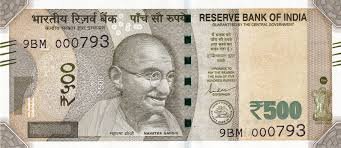
Mahatma Gandhi first appeared on a regularly circulated banknote in October 1987, when India introduced the ₹500 note.
The note featured Gandhi’s smiling portrait and became a landmark moment in Indian currency design.
🔐 Why Was the Mahatma Gandhi Series Introduced?
By the early 1990s, concerns over counterfeit currency were growing.
To improve security features and modernize Indian banknotes, RBI decided to redesign the entire currency series.
Gandhi was chosen because:
✅ He symbolizes India’s freedom struggle
✅ He is recognized globally
✅ He represents peace, unity, and national identity
💵 The Mahatma Gandhi Series of 1996
The launch of the Mahatma Gandhi Series in 1996 transformed the appearance of Indian currency.
From ₹10 to higher-value denominations, Gandhi’s portrait became the central design element and remains a defining feature of Indian banknotes even today.