








































































































































































































































































































































































































🏦 The Reserve Bank of India on Friday decided to keep the benchmark repo rate unchanged at 5.25%, marking the second consecutive pause in interest rates.
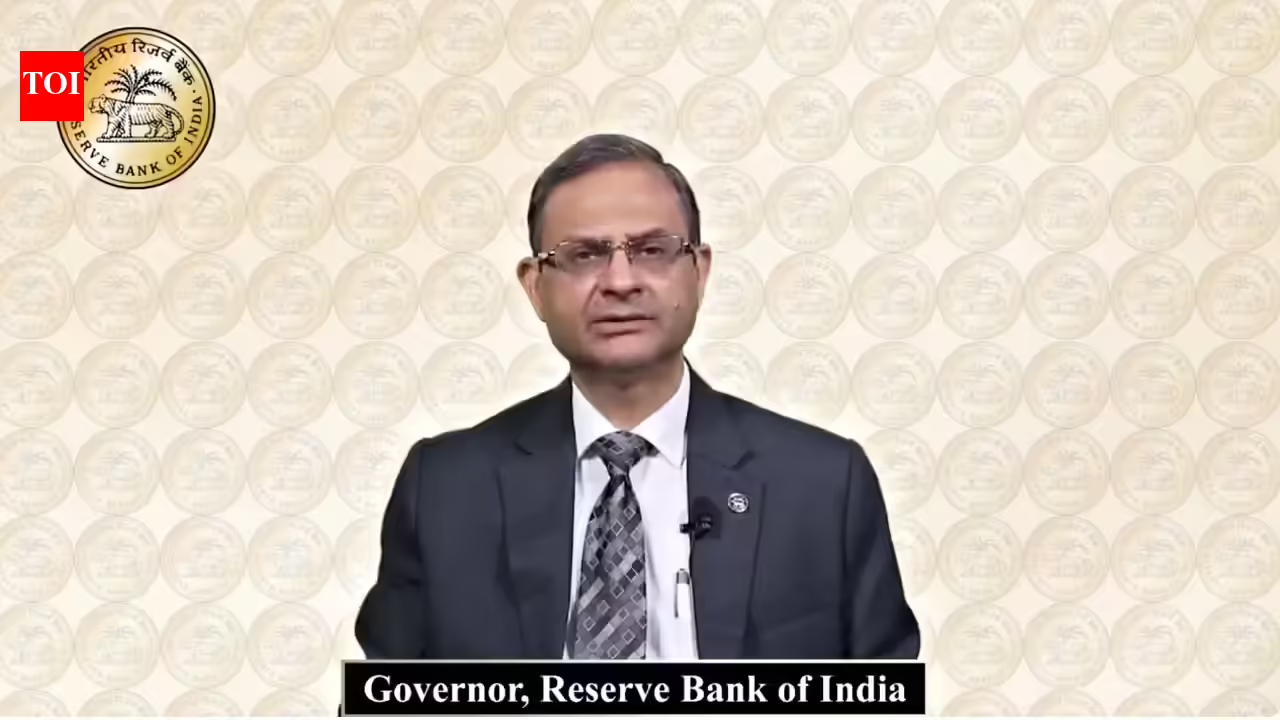
The decision was announced by RBI Governor Sanjay Malhotra after the Monetary Policy Committee (MPC) meeting.
📌 Why Did RBI Keep Rates Unchanged?
The central bank cited several global and domestic risks, including:
⚠️ Rising crude oil prices
⚠️ Supply chain disruptions due to the West Asia conflict
⚠️ Weak monsoon concerns
⚠️ Pressure on the Indian rupee
⚠️ Potential inflationary risks
Despite inflation remaining under control, policymakers preferred to maintain caution amid growing uncertainty in global markets.
📉 GDP Growth Forecast Reduced
The RBI also revised India’s growth outlook.
📊 Previous GDP Growth Forecast: 6.9%
📊 Revised GDP Growth Forecast: 6.6%
The downgrade reflects concerns over global economic challenges and the impact of higher energy prices on the Indian economy.
📈 Inflation Remains Under Control
One of the positive indicators for the economy has been retail inflation.
According to recent data, Consumer Price Index (CPI)-based inflation stood at 3.48% in April, moving closer to RBI’s medium-term target of 4%.
However, the central bank warned that future inflation risks remain due to:
🛢️ Higher fuel prices
🌧️ Uncertain monsoon conditions
🌍 Global geopolitical tensions
💵 Rupee Under Pressure
The Indian rupee has faced significant pressure throughout 2026.
📉 The currency recently touched a record low against the US dollar and has emerged as one of the weakest-performing emerging-market currencies this year.
Analysts attribute the decline to:
- Expensive crude oil imports
- Foreign capital outflows
- Rising trade deficits
- Strong US dollar demand
🏦 Previous Rate Cuts
Before this pause, RBI had reduced the repo rate multiple times as inflation eased.
📌 February 2026: 25 bps cut
📌 April 2026: 25 bps cut
📌 June 2025: 50 bps cut
These measures were aimed at supporting economic growth and improving liquidity.
🎯 What It Means for Borrowers
For now, borrowers are unlikely to see any immediate change in:
🏠 Home loan EMIs
🚗 Auto loan interest rates
💳 Retail lending costs
Banks are expected to maintain current lending rates unless future policy changes occur.
📊 Market Outlook
Economists believe RBI’s decision reflects a balancing act between supporting growth and preventing inflation from rising again.
The central bank is expected to closely monitor global oil prices, monsoon developments, and geopolitical events before considering any future rate changes.