



















































































































































































































































































































































Tesla Unveils Long-Delayed Roadster With SpaceX Technology, Fueling Merger Speculation
Tesla has unveiled its long-awaited next-generation Roadster, showcasing ambitious performance claims and SpaceX-inspired technology nearly nine years after first presenting the electric sports car concept in 2017. The reveal has also reignited speculation about a potential merger between Tesla and SpaceX.
The unveiling took place on October 15, 2026, at a SpaceX test site in McGregor, Texas. Tesla CEO Elon Musk appeared alongside design leader Franz von Holzhausen and vehicle engineering vice president Lars Moravy to present the new two-seat electric sports car.
Tesla Roadster Claims Sub-One-Second Acceleration
One of the most striking claims from the event was Tesla’s assertion that the new Roadster can accelerate from zero to 60 miles per hour in less than one second. The company demonstrated the vehicle’s performance during the livestreamed presentation.
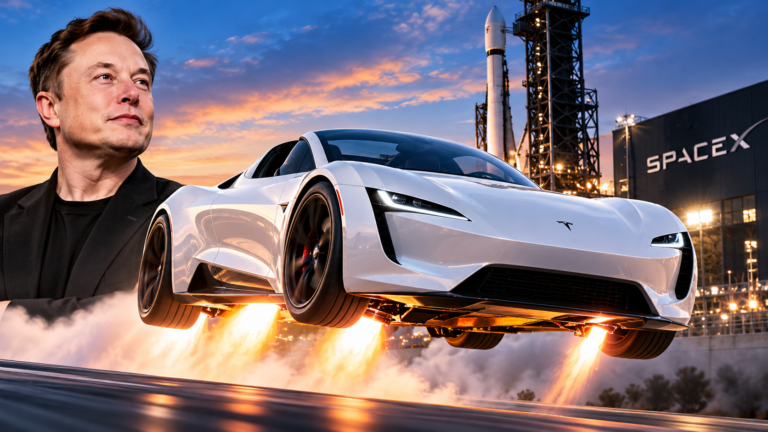
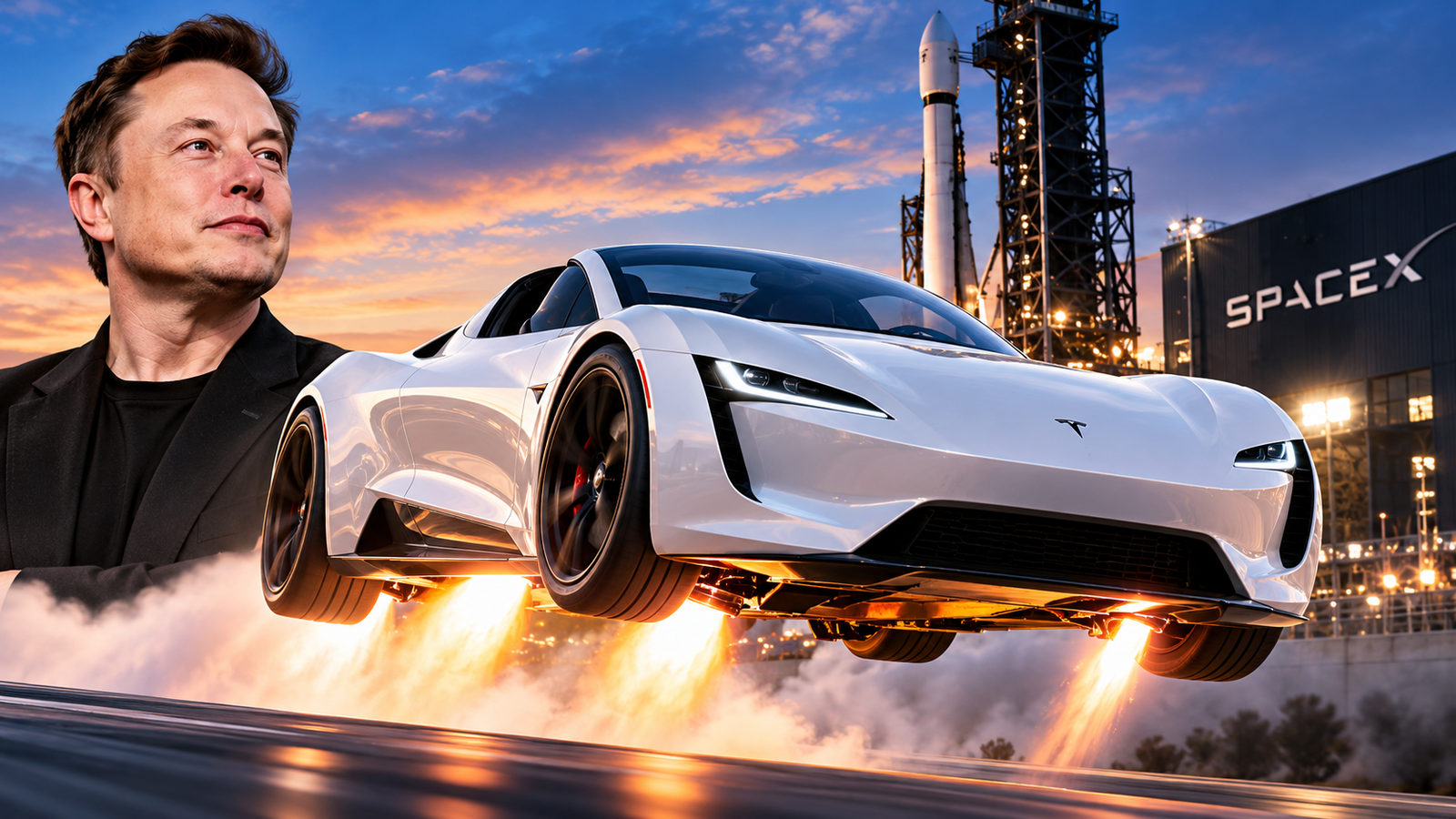
The prototype featured a white exterior and showcased dramatic manoeuvres, including racing up a curved ramp, moving upside down, flipping in mid-air and hovering before landing. However, the demonstration does not independently establish the vehicle’s final production capabilities.
Tesla has incorporated several technologies associated with SpaceX into the prototype, including small rocket thrusters, carbon-overlay pressure vessels, diffusers and powerful fans. These systems are intended to enhance performance and enable unusual manoeuvres.
The company has not yet released complete technical specifications or confirmed the final capabilities of the production model.
Production Expected in 2028 After Years of Delays
Musk first introduced the next-generation Roadster concept in November 2017, when Tesla began accepting reservations with a $50,000 deposit. The company subsequently missed multiple anticipated delivery timelines, leaving reservation holders waiting for years.
At the October 2026 unveiling, Musk said production is expected to begin in 2028. Tesla did not announce the vehicle’s final price or provide a comprehensive breakdown of its performance variants.
The company has recently reopened reservations, accepting $50,000 deposits from prospective customers in the United States, Canada and China.
Questions also remain about the car’s regulatory status and suitability for public roads. Musk acknowledged during the presentation that the vehicle was not necessarily designed with safety optimisation as its primary objective.
SpaceX Collaboration Fuels Tesla Merger Speculation
The Roadster unveiling has added momentum to speculation that Tesla and SpaceX could eventually merge. The companies have increasingly collaborated, with Musk overseeing both businesses and their operations sharing certain personnel and commercial relationships.
The merger discussion gained attention after SpaceX went public in June 2026. SpaceX Chief Operating Officer Gwynne Shotwell previously suggested that combining the companies could make Musk’s responsibilities easier to manage.
Barclays analyst Dan Levy also predicted in a recent note that a potential merger could occur before the end of 2026. However, neither company has confirmed a merger agreement, and the Roadster presentation alone does not establish that a transaction is planned.
Tesla’s Focus on Future Technology
The new Roadster represents a specialised, high-end vehicle rather than a model expected to materially transform Tesla’s near-term finances. Its combination of electric propulsion and SpaceX-derived technology highlights Musk’s broader ambitions to bring aerospace-inspired engineering into automotive products.
Tesla also indicated that the Roadster would not include its Full Self-Driving system. Musk described it as the last vehicle the company intends to produce specifically for human driving, signalling the company’s continued emphasis on autonomous technology in its wider vehicle strategy.
Despite the ambitious performance claims, the Roadster still faces important milestones before reaching customers, including final specifications, production readiness, pricing and regulatory requirements.
For reservation holders and electric-vehicle enthusiasts, the 2028 production target offers a new timeline for a project that has been delayed repeatedly since its original announcement. Whether Tesla can deliver the promised performance and advanced features at scale remains to be seen.