
































































































































































































































































































































































































































































5.44 Magnitude Earthquake Jolts Afghanistan’s Hindu Kush Region
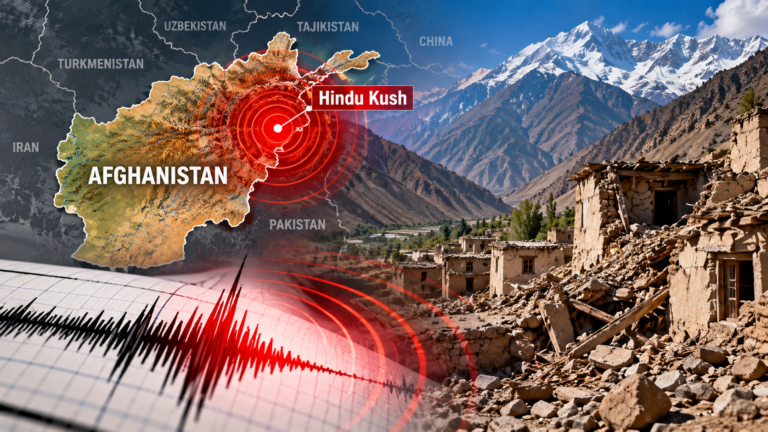
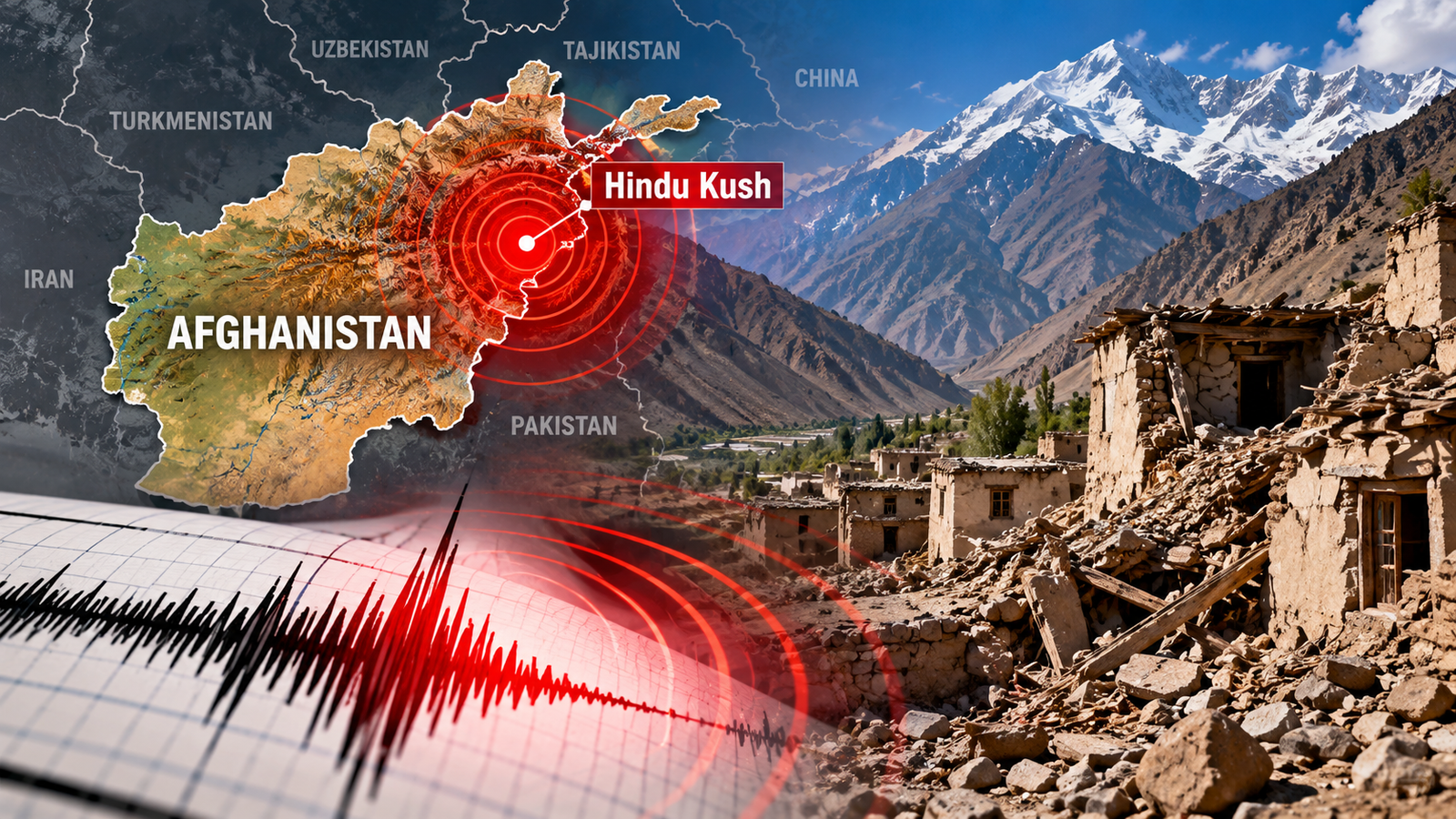
A 5.44-magnitude earthquake struck Afghanistan’s Hindu Kush region early Thursday morning, triggering tremors in the seismically active mountainous area. According to the GFZ German Research Centre for Geosciences, the earthquake occurred at around 6:59 AM IST.
The earthquake was recorded at a depth of approximately 10 kilometres, making it a relatively shallow seismic event. Its epicentre was initially located at 36.05 degrees north latitude and 68.87 degrees east longitude.
As of the latest available information, there were no immediate reports of casualties or significant damage following the earthquake.
Earthquake Strikes Hindu Kush Region
The tremor struck the Hindu Kush region of Afghanistan during the early morning hours. The area is known for frequent seismic activity because of its complex geological structure and location within a major tectonic zone.
The earthquake had a magnitude of 5.44 and occurred relatively close to the Earth’s surface. Shallow earthquakes can sometimes produce stronger shaking around the epicentre compared with deeper earthquakes of a similar magnitude.
However, the initial reports did not indicate any major destruction or loss of life following Thursday morning’s tremor.
Why Is the Hindu Kush Region Prone to Earthquakes?
The Hindu Kush is one of the most earthquake-prone regions in Afghanistan and the surrounding parts of Central and South Asia.
The broader Hindu Kush-Pamir region sits within an area affected by the ongoing movement and collision of the Indian and Eurasian tectonic plates. This long-term geological process has contributed to repeated earthquakes across Afghanistan, Pakistan, the Himalayas and neighbouring mountain systems.
The complex tectonic conditions beneath the region mean that earthquakes can occur at different depths and with varying levels of intensity.
Shallow Depth Made the Earthquake Notable
One of the notable aspects of Thursday’s earthquake was its relatively shallow depth of around 10 kilometres.
In general, an earthquake occurring closer to the surface can result in stronger shaking near its epicentre because the seismic waves have less distance to travel before reaching the ground.
The actual impact, however, depends on several factors, including the earthquake’s magnitude, distance from populated areas, local geology and the quality of buildings and infrastructure.
No Immediate Reports of Major Damage
There were no immediate reports of casualties or significant damage after the earthquake.
Authorities and seismic monitoring agencies typically continue to assess the situation following an earthquake, as initial reports can change as information from affected areas becomes available.
The absence of immediate reports of major damage does not necessarily mean that the tremor was not felt in nearby areas, particularly given the earthquake’s shallow depth.
Afghanistan Remains Highly Vulnerable to Seismic Activity
Afghanistan has experienced several earthquakes over the years, with the country’s mountainous terrain and active geological setting making parts of the country particularly vulnerable to seismic events.
The wider Hindu Kush and surrounding regions have recorded both moderate and stronger earthquakes, some of which have caused significant damage and casualties in the past.
Seismic activity in the region is closely monitored by international and regional agencies to determine an earthquake’s magnitude, depth and location and to identify any potential aftershocks.
For now, the 5.44-magnitude Hindu Kush earthquake remains the latest significant tremor reported from the region, with no immediate reports of casualties or major damage.
Source: GFZ German Research Centre for Geosciences; Times of India