























































































































































































































































































































































































Himalayas Under Growing Climate Pressure as Glaciers Melt Faster
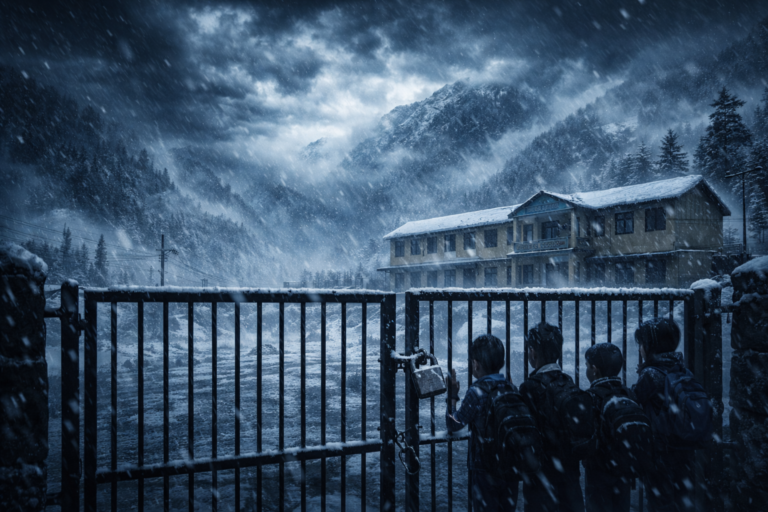
The Himalayan region is facing a growing environmental and economic threat as glaciers continue to lose mass at an accelerating rate, while expanding glacial lakes, unstable mountain slopes and gaps in monitoring increase the risk of disasters.
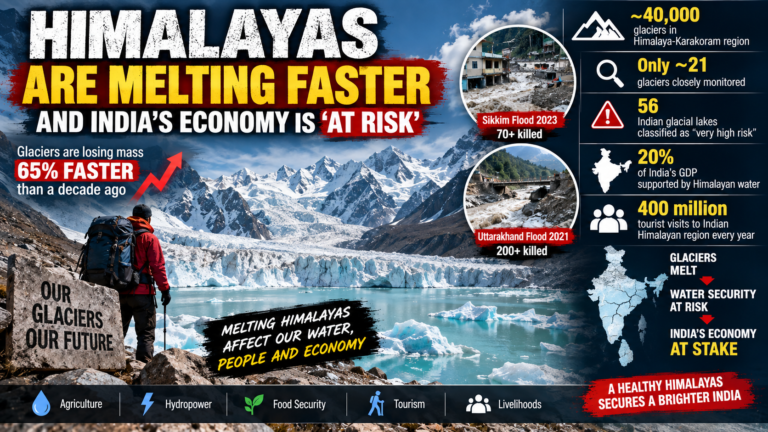
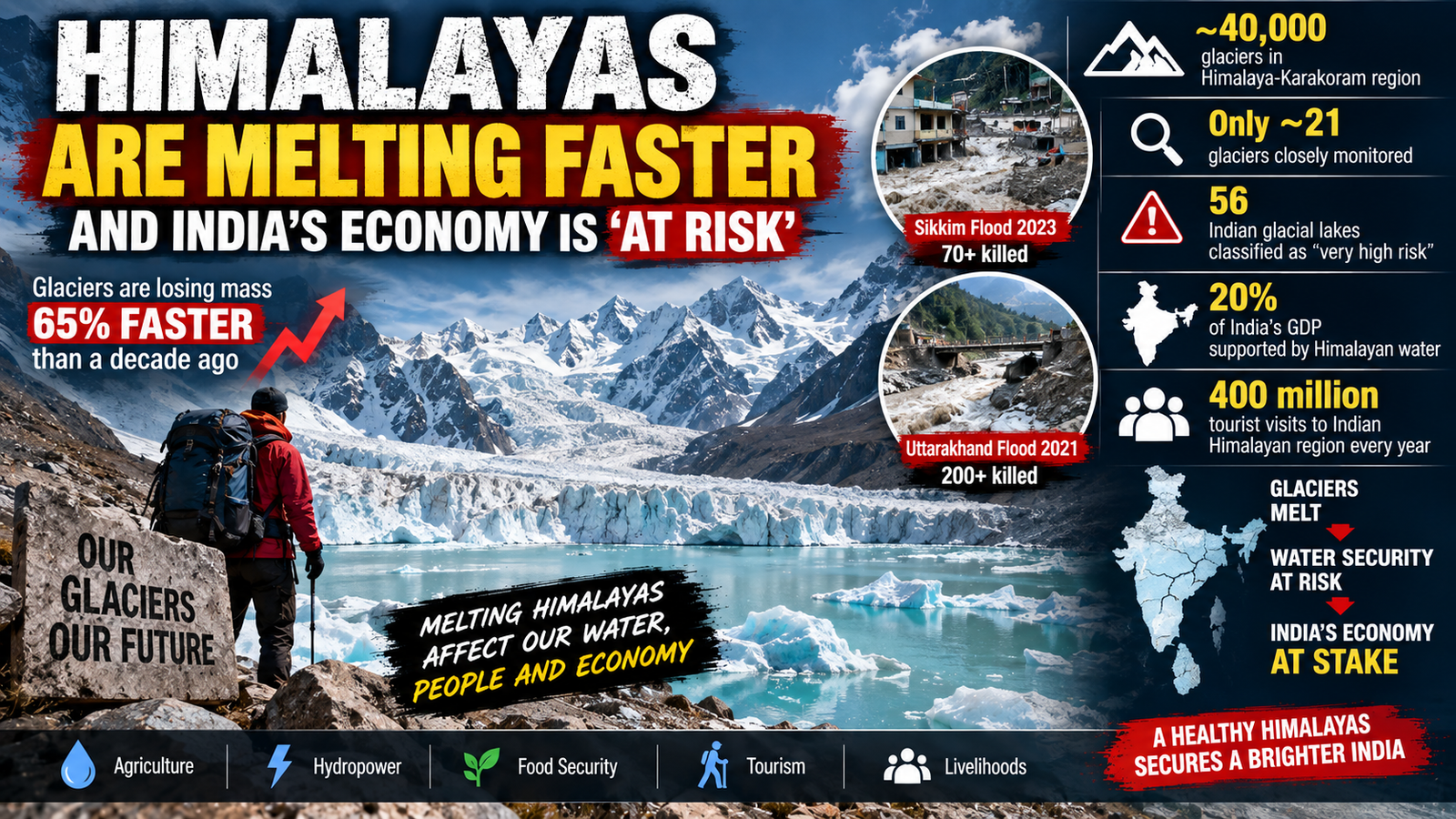
A new report by global consultancy Systemiq, produced with the Integrated Mountain Initiative and with technical contributions from ICIMOD and the GB Pant National Institute of Himalayan Environment, says Himalayan glaciers are now losing mass 65% faster than they were a decade ago.
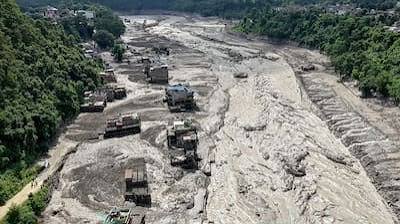
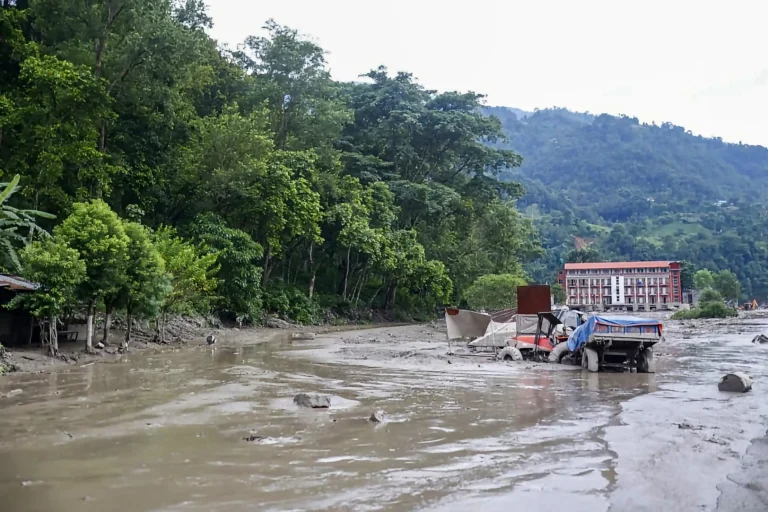
The report comes after devastating floods in Nepal and Tibet that killed more than 1,300 people and caused widespread destruction, highlighting the increasingly complex risks associated with a rapidly changing Himalayan environment.
Only a Small Fraction of Himalayan Glaciers Are Closely Monitored
The Himalaya-Karakoram region is estimated to contain around 40,000 glaciers, but the report says only about 21 are currently being monitored in detail and on a sustained basis.
This monitoring gap is becoming increasingly important as the mountain environment changes rapidly.
When glaciers retreat, they can leave behind expanding lakes that may be held back by unstable deposits of rock and ice. Rising temperatures are also contributing to the destabilisation of permafrost and high-mountain slopes, potentially increasing the likelihood of cascading hazards.
🇮🇳 India Already Facing Glacial-Lake Risks
India’s Himalayan region accounts for around 18% of the country’s land area, yet according to the report, it accounts for approximately 35% of disasters.
The Indian government told Parliament in July that 56 glacial lakes had been classified as “very high risk” following a 2025 scientific assessment of 189 high-risk lakes in the Indian Himalayan region.
The Central Water Commission is monitoring 2,485 glacial lakes larger than 10 hectares across India’s Himalayan river basins, according to the government.
Sikkim and Uttarakhand Show the Scale of the Threat
India has already experienced deadly consequences from glacial lake-related disasters.
In 2023, a glacial lake outburst flood in Sikkim killed at least 70 people and caused extensive damage to roads, bridges and hydropower infrastructure.
In 2021, a major flood in Uttarakhand swept through the Rishiganga and Dhauliganga valleys, killing more than 200 people.
These events demonstrate that the risks associated with glacier retreat extend beyond gradual changes in water availability and can include sudden and destructive floods.
💧 Why Himalayan Glaciers Matter to India’s Economy
The Himalayas form a vast natural water system that feeds rivers supporting hundreds of millions of people across South Asia.
According to the report, Himalayan water underpins approximately 20% of India’s GDP, supporting sectors including:
- Wheat and rice production
- Tea cultivation
- Hydropower
- Pilgrimage and tourism
- Wider downstream economic activity
However, the report estimates that Himalayan mountain states capture only around 5% of the economic value generated by this water system.
This makes glacier loss not only an environmental issue but also an important economic and development concern.
🌊 ‘Peak Water’ Could Become a Turning Point
Another major concern is the changing availability of glacier-fed water.
ICIMOD expects “peak water” to occur around the middle of the century in most Hindu Kush Himalayan river basins.
Peak water refers to the point at which glacier runoff reaches its maximum before beginning to decline as glaciers continue to lose mass.
This creates a potential long-term challenge: while accelerated melting can temporarily increase water availability in some areas, continued glacier loss eventually reduces the amount of stored ice available to feed rivers.
🌍 Himalayas Called the ‘Third Pole’
Economist Lord Nicholas Stern, chair of the Grantham Research Institute on Climate Change and the Environment at the London School of Economics, described the Himalayas as the “Third Pole.”
The region is particularly significant because, unlike the Arctic and Antarctic, hundreds of millions of people live downstream of Himalayan water systems.
The report warns that the ecological system supporting these populations and economies is approaching a potentially dangerous threshold.
🏭 Black Carbon Is Accelerating Glacier Melt
Not all factors contributing to Himalayan glacier loss are beyond regional control.
The Systemiq research estimates that approximately one-third of Himalayan glacier melt is driven by black carbon, with a significant amount originating from sources such as brick kilns in the plains.
Black carbon, or soot, deposited on snow and ice absorbs sunlight and can accelerate melting.
This is significant because black-carbon pollution can be reduced through regional policies and cleaner technologies, potentially offering governments a more direct lever for slowing some aspects of glacier melt.
⚠️ Tourism Is Another Major Challenge
The Indian Himalayan region receives approximately 400 million tourist visits every year, according to the report.
Researchers argue that mountain tourism needs to be reconsidered, with greater emphasis on generating economic value that remains within local communities and is reinvested in the region rather than focusing primarily on maximising visitor numbers.
With climate risks increasing, poorly planned tourism infrastructure could also add pressure to already vulnerable mountain environments.
🛡️ Report Calls for 10 Priority Transitions
The report proposes 10 priority transitions aimed at making the Himalayan region more resilient.
These include:
- Reducing black-carbon emissions
- Expanding glacier monitoring
- Strengthening disaster early-warning systems
- Improving emergency preparedness
- Protecting vulnerable infrastructure
- Coordinating evacuation plans
- Rethinking mountain tourism
- Increasing investment in resilience
- Strengthening cross-border information sharing
- Improving cooperation between Himalayan countries
One key recommendation is for governments to agree in advance on what actions should be taken when dangerous conditions emerge, rather than waiting until a disaster is already unfolding.
🤝 Himalayan Risks Cross National Borders
ICIMOD Director General Pema Gyamtsho warned that the risks are becoming increasingly complex because glaciers, permafrost, mountain slopes, rivers and downstream infrastructure are interconnected.
Hazards in the Himalayas do not stop at international borders. That makes cross-border monitoring, shared risk information, early-warning systems and joint resilience investment increasingly important.
The challenge is therefore regional rather than limited to a single country.
📊 Key Facts at a Glance
| Indicator | Key Figure |
|---|---|
| Himalayan glacier mass-loss acceleration | 65% faster than a decade ago |
| Estimated glaciers in Himalaya-Karakoram | ~40,000 |
| Glaciers under detailed sustained monitoring | ~21 |
| Indian land that is Himalayan | ~18% |
| Share of disasters attributed to the region | ~35% |
| Very-high-risk glacial lakes in India | 56 |
| Glacial lakes monitored by CWC (>10 ha) | 2,485 |
| Estimated share of India’s GDP supported by Himalayan water | ~20% |
| Economic value captured by mountain states | ~5% |
| Estimated Himalayan glacier melt linked to black carbon | ~1/3 |
| Annual visits to Indian Himalayan region | ~400 million |
What This Means for India
The Himalayan crisis is no longer simply a story about shrinking glaciers. It potentially affects water security, agriculture, hydropower, tourism, infrastructure, disaster management and economic activity across a much wider region.
The immediate challenge is to improve monitoring and early-warning systems while reducing controllable sources of warming and pollution such as black carbon.
At the same time, governments across the Himalayan region may need greater cooperation because floods, glacier-related hazards and changes in river systems can affect communities and infrastructure far beyond the location where the initial environmental change occurs.
The report’s central warning is that the costs of inaction could extend well beyond the mountains themselves, potentially affecting the livelihoods and economies of hundreds of millions of people who depend on Himalayan water.