



























































































































































































































































































































































































































































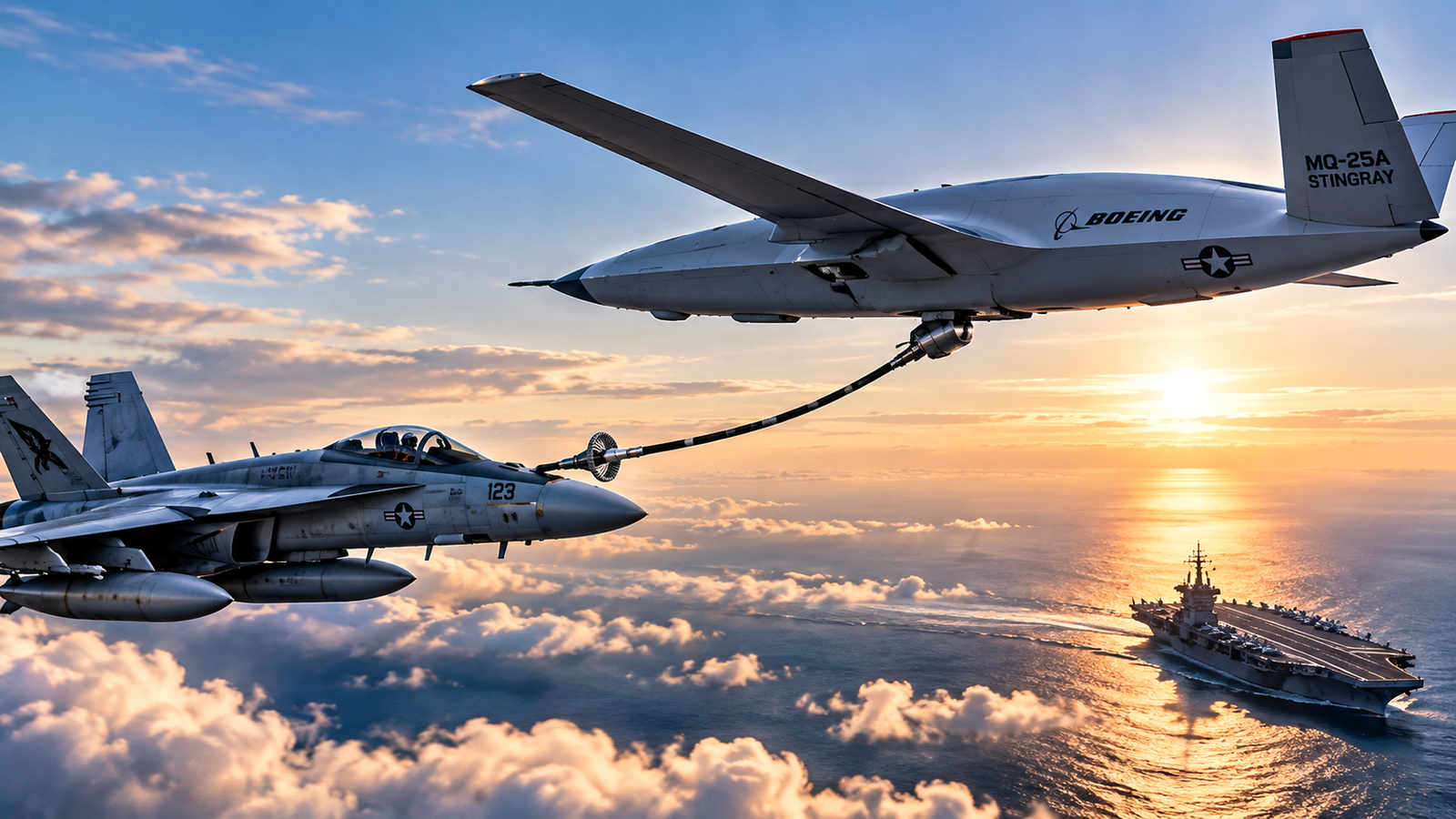
Boeing Tests New Software to Connect Fighter Jets With MQ-25A Drone Tanker
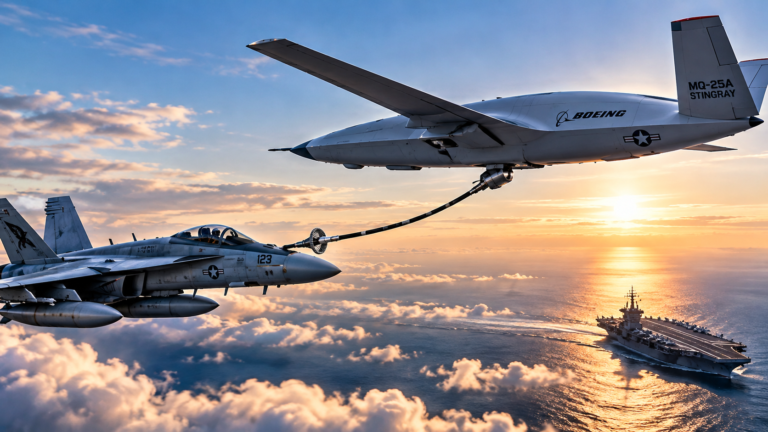
Boeing has demonstrated new software designed to help crewed military aircraft coordinate with unmanned aerial vehicles, marking a step toward integrating the technology into the US Navy’s MQ-25A Stingray drone tanker. The system aims to let pilots coordinate aerial refueling operations in real time, potentially freeing fighter jets for combat missions.
The test took place during the Emerald Flag exercise at Eglin Air Force Base in Florida. According to reports, the demonstration used Beechcraft aircraft equipped with software that enabled airborne command and control through the military’s Link 16 communications network.
Boeing’s New Software for Fighter Jets and Drones
The software is designed to allow pilots aboard crewed aircraft to coordinate with unmanned platforms through existing military communication systems. Link 16 enables participating aircraft and other military platforms to exchange tactical information.
Developed with the US Navy, the technology brings together Boeing’s Phantom Works division and expertise from the F/A-18 and F-22 development programs.
Its open architecture is intended to support different aircraft types rather than being restricted to a single platform. Boeing plans to integrate the capability into the MQ-25A Stingray, an unmanned aerial refueling aircraft being developed for carrier-based operations.
How the MQ-25A Stingray Could Change Aerial Refueling
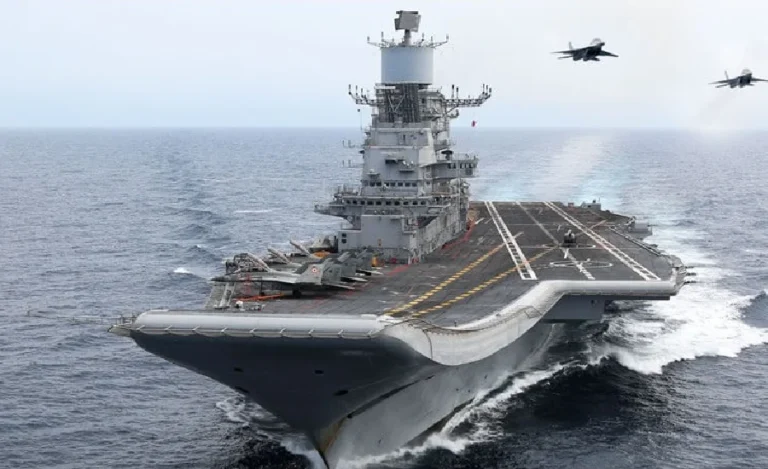
The MQ-25A Stingray is designed to provide aerial refueling support for US Navy carrier air wings. Today, some F/A-18 Super Hornets perform the tanker role, reducing the number of aircraft available for strike missions.
Using an unmanned tanker could help address this limitation by transferring a portion of aerial refueling duties to a dedicated platform.
The potential benefits include:
- More fighter jets for combat: Super Hornets could spend less time performing refueling duties for other aircraft.
- Extended operational range: Aerial refueling can help carrier-based aircraft operate farther from their launch points.
- More flexible coordination: Pilots could coordinate tanker operations while airborne.
- Reduced strain on fighter fleets: Dedicated tanker drones could reduce the flying hours fighters spend on support missions.
The software is intended to improve coordination between crewed aircraft and the unmanned tanker, although its operational capabilities will depend on further testing and integration.
Link 16 Network Enables Airborne Coordination
A key part of the demonstration was the use of Link 16, a tactical data network used by the US military and allied forces.
The network allows compatible platforms to exchange information, supporting coordination across different aircraft and military units. Boeing’s demonstration focused on using this established communication infrastructure to support airborne command and control.
According to the reported test results, the trial demonstrated the communication capability using Beechcraft aircraft. The MQ-25A itself was not involved in the test, and additional flight testing will be required before the software can be incorporated into the drone’s operational systems.
MQ-25A Stingray Program Moves Toward Production
The software demonstration comes as the MQ-25A program advances toward production. In September 2026, the US Navy awarded Boeing a $562 million contract for the low-rate initial production of the first three tanker aircraft, according to the report.
Deliveries are expected to begin in 2029.
The program also reached a milestone in April 2026, when the Stingray completed its first full flight in an operational configuration, including autonomous taxiing, takeoff, flight and landing, as described in the report.
These developments are intended to move the MQ-25A closer to its planned role supporting carrier-based aviation.
What This Means for Future Naval Warfare
The integration of unmanned tankers with crewed fighter aircraft could change how aircraft carrier air wings allocate their resources. By assigning more refueling duties to dedicated drones, the Navy aims to preserve fighter availability for missions such as air defense and strike operations.
The latest software test represents an early step toward that goal rather than a completed operational capability. Further testing will be needed to validate the system with the MQ-25A and establish how it will be used in operational environments.
If successful, the technology could strengthen coordination between crewed aircraft and unmanned support systems, giving naval aviation more flexibility during complex missions.