



































































































































































































































































































































🌍 Earth Getting Brighter at Night – Summary
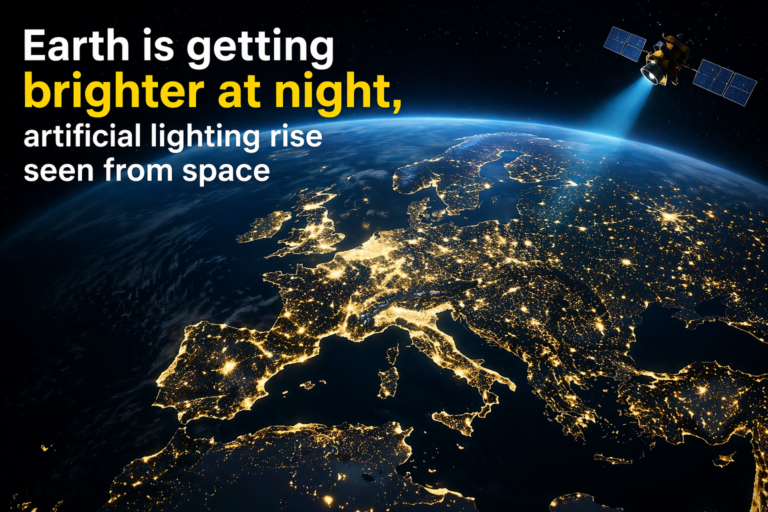
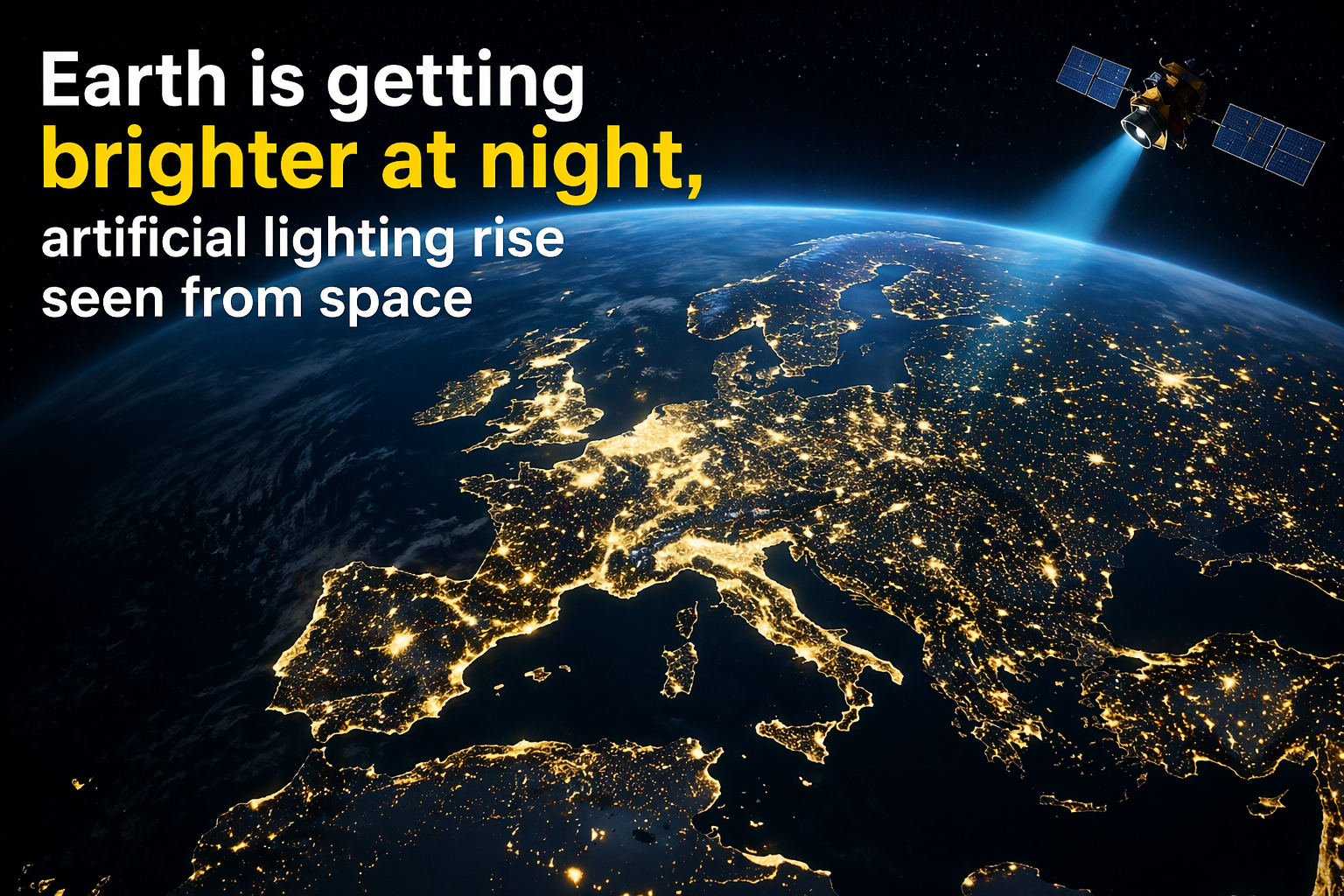
Satellite data shows that Earth’s nights are becoming brighter overall, but not in a uniform way across regions. Artificial lighting increased by about 16% between 2014 and 2022, driven by factors like economic growth, urbanisation, and improved access to electricity.
The study, published in Nature, reveals that Earth’s nighttime brightness is highly dynamic, constantly changing rather than steadily increasing as previously believed.
Rapid increases in lighting were observed in emerging economies, especially in sub-Saharan Africa and Southeast Asia, where electrification and infrastructure development are expanding quickly.
In contrast, some regions showed declines in lighting:
- Conflict-affected countries like Ukraine, Yemen, and Afghanistan saw sharp drops due to war and instability
- Europe recorded a 4% decrease, largely intentional, driven by energy-efficient LEDs, strict regulations, and efforts to reduce light pollution
Countries like France have even introduced measures such as switching off streetlights in low-activity areas at night.
Scientists warn that rising artificial light can harm ecosystems and human health by disrupting wildlife behavior and sleep cycles. As a result, balancing development with sustainability has become a major global challenge.