

























































































































































































































































































📌 Introduction
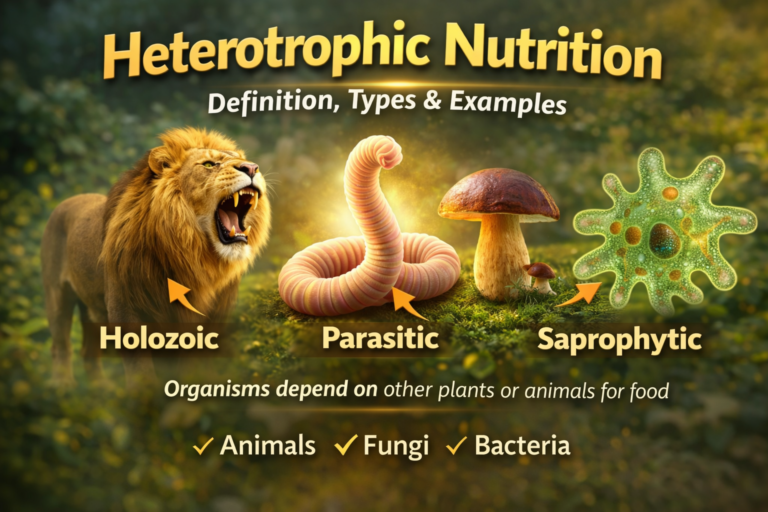
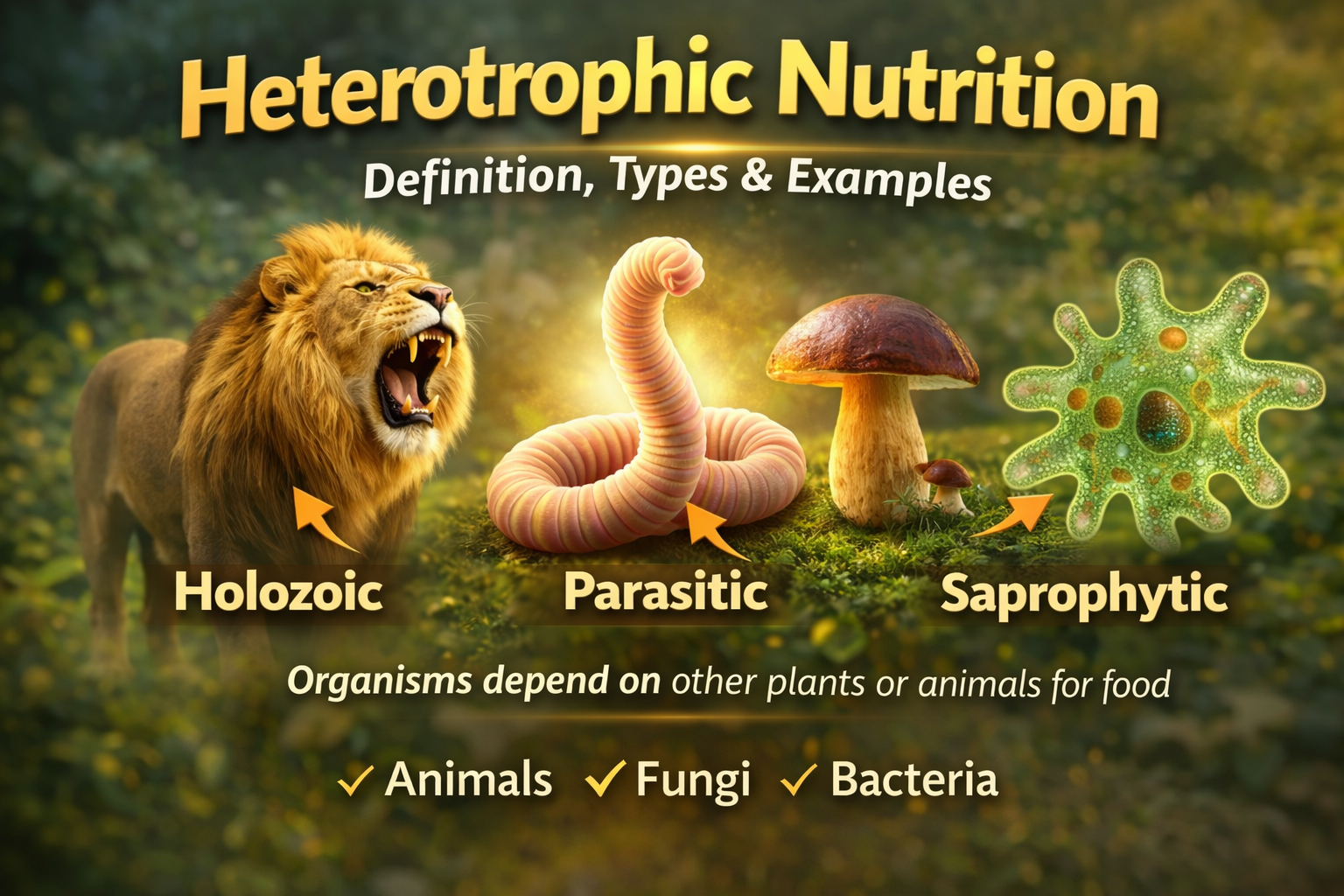
Most living organisms cannot produce their own food. They depend on other plants or animals to obtain nutrition and energy. This mode of nutrition is known as heterotrophic nutrition, and it plays a crucial role in maintaining the food chain and ecosystem balance.
Heterotrophic nutrition is a mode of nutrition in which organisms cannot synthesize their own food from inorganic substances. They depend on autotrophs or other organisms for nourishment.
Plants perform photosynthesis; heterotrophs do not. Instead, they consume complex organic substances, which are later broken down into simpler forms to release energy.
🧬 Characteristics of Heterotrophic Nutrition
- Organisms depend on others for food
- They ingest organic material directly or indirectly
- Require digestion to convert complex food into simpler compounds
- Cannot produce food using sunlight and chlorophyll
👨🏫 Examples of Heterotrophic Organisms
- Humans
- Animals
- Fungi
- Most bacteria
- Protozoa like Amoeba & Paramecium
Heterotrophic nutrition is categorized into three major types 👇
1️⃣ Holozoic Nutrition
In this mode, organisms ingest solid/liquid food and digest it internally.
Examples:
- Humans
- Dogs, Cats, Cows, Lions
- Amoeba, Paramecium
Steps Involved:
- Ingestion
- Digestion
- Absorption
- Assimilation
- Egestion
2️⃣ Saprophytic Nutrition
Organisms obtain nutrition by decomposing dead and decaying organic matter. They secrete digestive enzymes outside their body.
Examples:
- Fungi
- Mushroom
- Rhizopus (bread mould)
3️⃣ Parasitic Nutrition
Parasites depend on a living host for nourishment and may harm the host.
Examples:
- Tapeworm
- Lice
- Plasmodium
- Cuscuta (Amarbel plant)
⚙️ How Heterotrophic Nutrition Works – Process
- Organism consumes organic material
- Food is broken down using enzymes
- Complex compounds become simpler molecules
- Energy is released for metabolic activities
- Undigested materials are expelled
🔁 Difference between Autotrophic & Heterotrophic Nutrition
| Feature | Autotrophic | Heterotrophic |
|---|---|---|
| Food preparation | Self (photosynthesis) | Depends on others |
| Energy source | Sunlight | Animals/plants |
| Chlorophyll | Present in plants | Absent |
| Examples | Green plants | Humans, animals |
📚 Importance of Heterotrophic Nutrition
- Maintains balance in the ecosystem
- Helps in decomposition & recycling
- Energy transfer in food chain
- Connects consumers and producers