



























































































































































































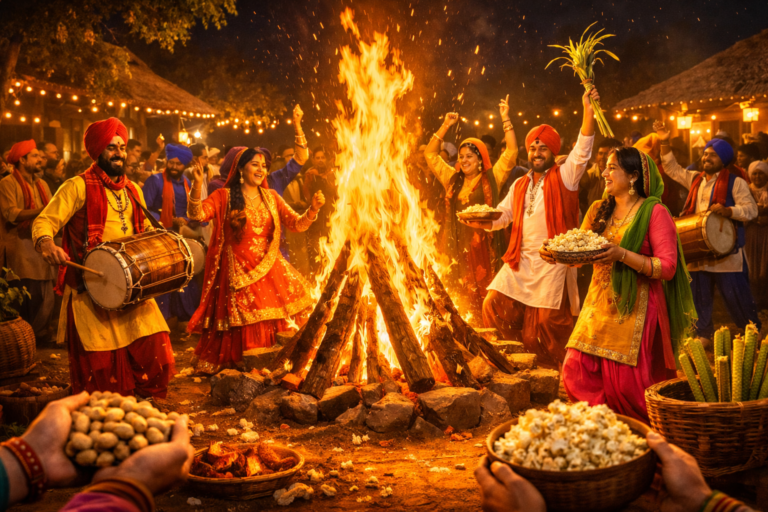






















































































Pongal 2026 will be celebrated from January 14 to January 17, with Thai Pongal, the main day of the festival, falling on January 15. Widely observed in Tamil Nadu and several parts of South India, Pongal marks the sun’s northward movement and the conclusion of the winter harvest season.
The festival unfolds over four days—Bhogi, Thai Pongal, Mattu Pongal, and Kaanum Pongal—each symbolising gratitude towards nature, the sun, cattle, and the land that sustains life. Homes are cleaned and decorated, rituals are performed at sunrise, and families gather to celebrate abundance and prosperity.
At the heart of Pongal celebrations lies food, which transforms everyday ingredients into meaningful expressions of tradition and renewal.
🌾 Why Food Is Central To Pongal
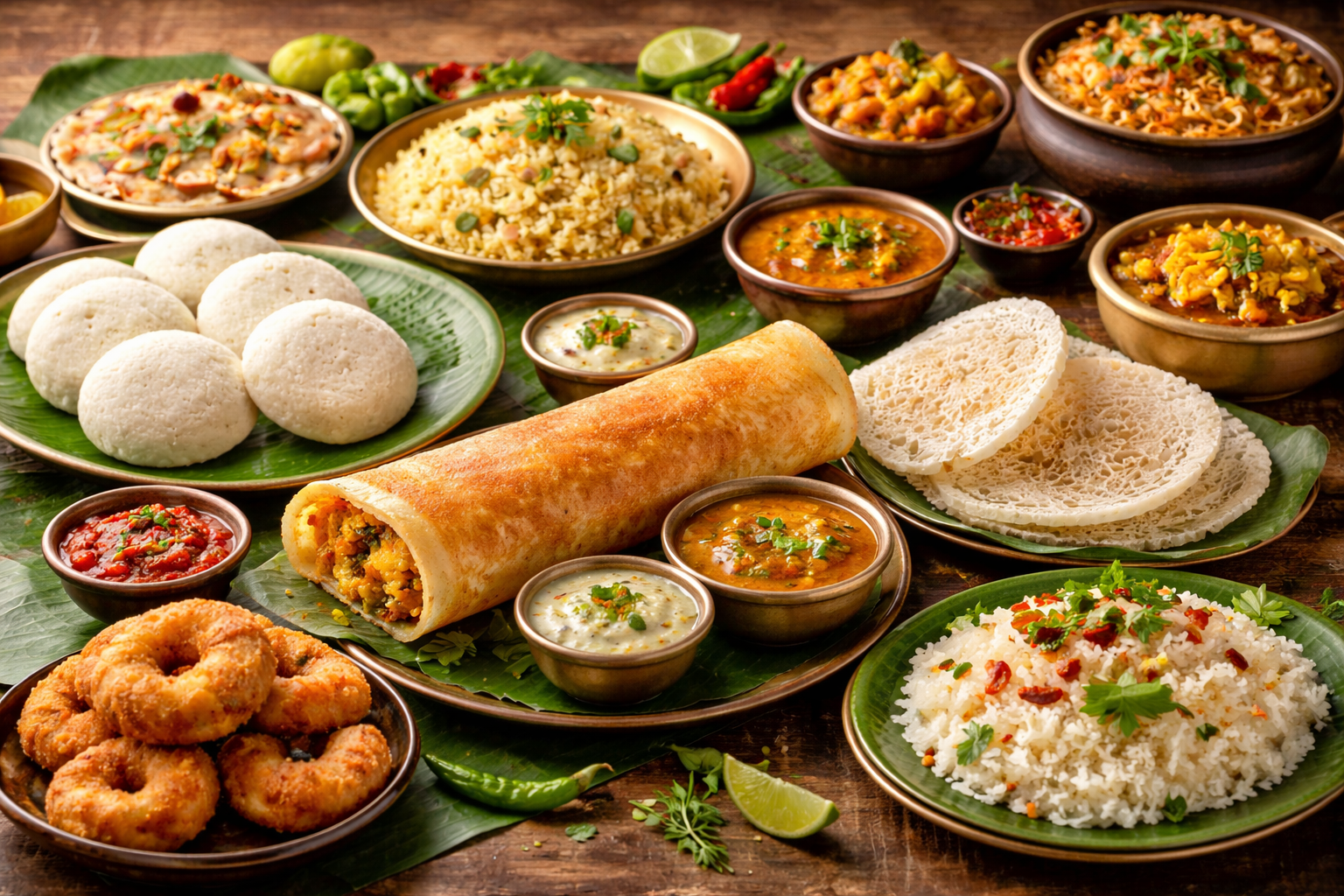
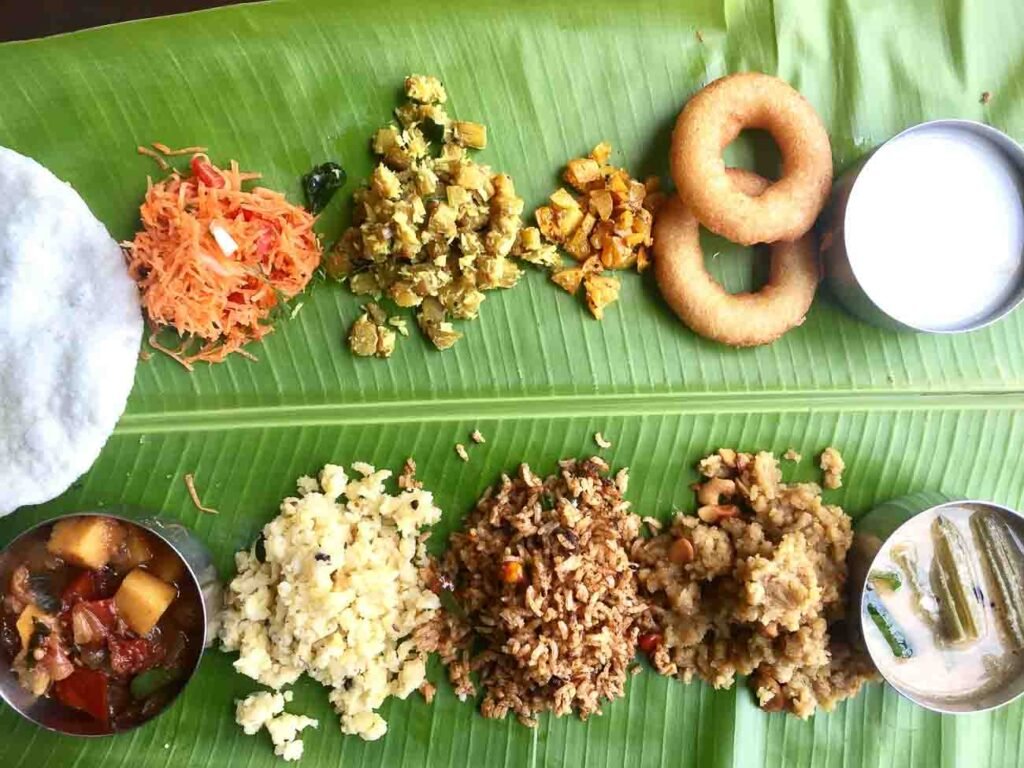
Pongal’s identity is deeply rooted in agriculture. Newly harvested rice forms the foundation of most festive dishes and is combined with lentils, milk, jaggery, coconut, ghee, pepper, and tamarind. These ingredients reflect the season’s bounty and reinforce the festival’s connection to farming life.
Rather than elaborate or luxurious preparations, Pongal food is simple, nourishing, and symbolic, highlighting how staple ingredients shape South Indian cuisine year-round.
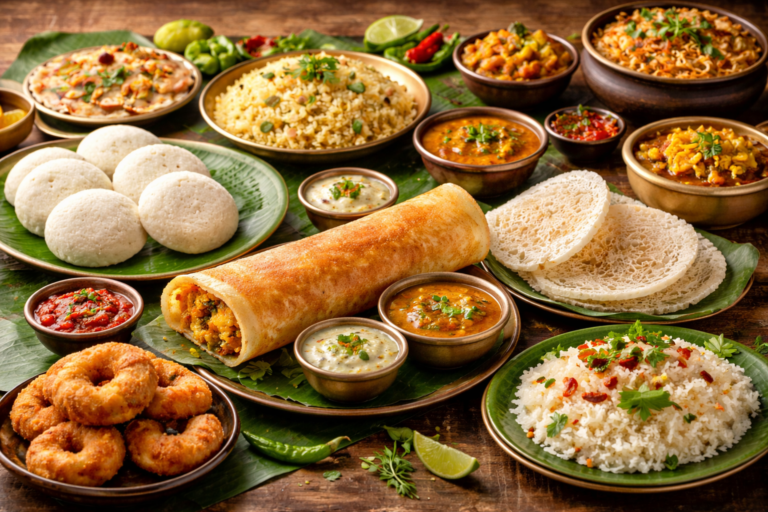
🍽️ 10 Traditional South Indian Dishes Enjoyed During Pongal
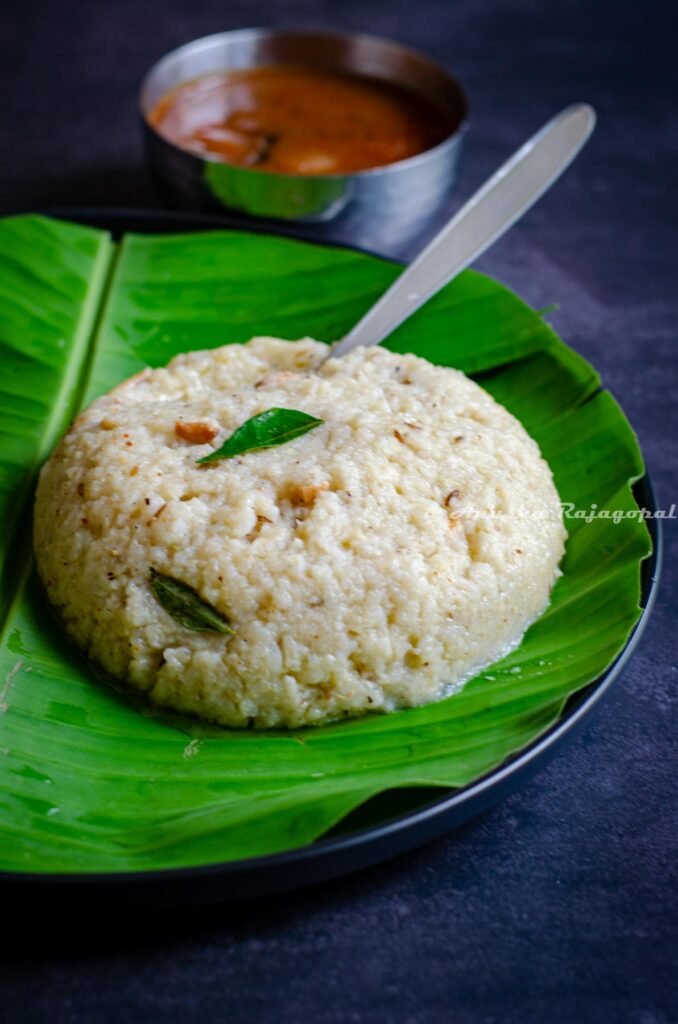
1. Ven Pongal
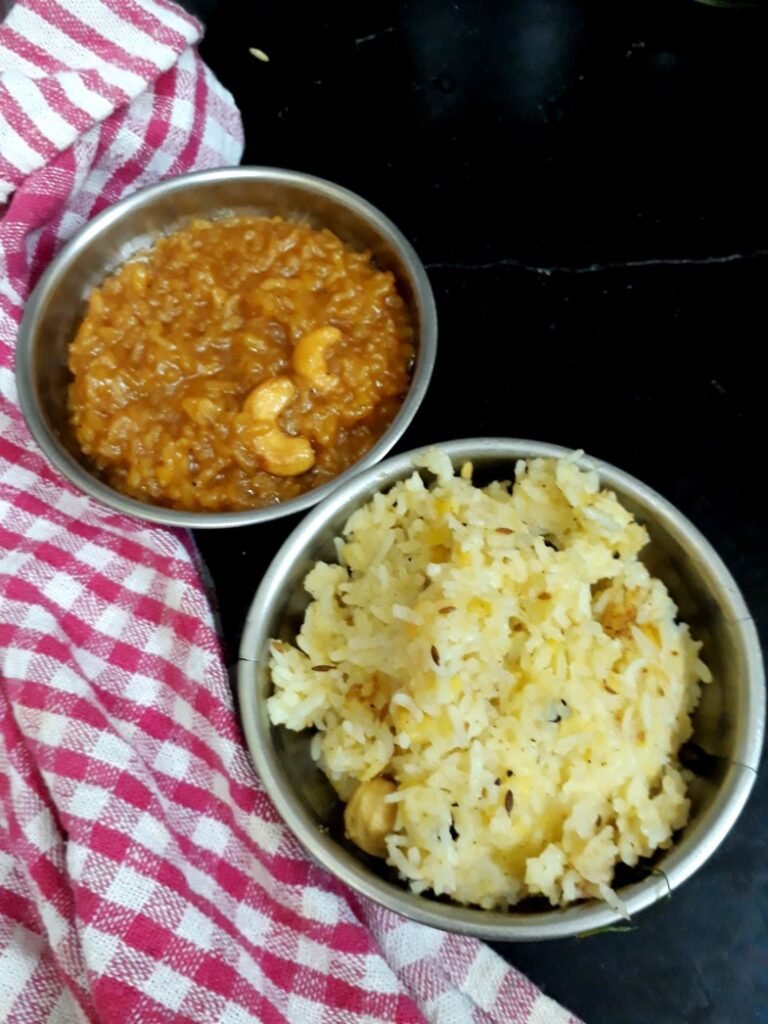
A comforting savoury dish made with rice and moong dal, Ven Pongal is flavoured with black pepper, cumin, ginger, and ghee. Soft and warming, it is commonly eaten for breakfast on Thai Pongal.
2. Sakkarai Pongal
Considered the soul of the festival, Sakkarai Pongal is prepared with rice, lentils, jaggery, ghee, cardamom, and nuts. Traditionally cooked until it overflows, it symbolises abundance and good fortune.
3. Puli Pongal
This tangy rice dish is flavoured with tamarind and tempered with mustard seeds, curry leaves, and dried red chillies. It reflects the everyday side of festive cooking and is ideal for sharing.
4. Payasam
Payasam adds gentle sweetness to the festive spread. Made with milk or jaggery along with rice, lentils, or vermicelli, it serves as a comforting end to the meal.
5. Pulihora
Pulihora is another tamarind-based rice dish known for its bold, layered flavours. Its long shelf life makes it popular during festive outings and gatherings.
6. Coconut Rice
Prepared with cooked rice and fresh grated coconut, coconut rice is mildly spiced with mustard seeds and curry leaves. It provides balance amid stronger flavours on the Pongal table.
7. Lemon Rice
Bright and refreshing, lemon rice gets its colour from turmeric and its tang from lemon juice. Peanuts and spices add texture, making it festive yet light.

8. Pongal Kootu
A wholesome vegetable-and-lentil preparation cooked with minimal spices and coconut, Pongal kootu highlights seasonal produce and complements rice-based dishes.
9. Medu Vada
Crisp on the outside and soft inside, medu vada is made from urad dal batter and fried until golden. It adds crunch to the festive spread and pairs well with chutney or sambar.
10. Sambar
Sambar brings the entire Pongal meal together. Made with lentils, vegetables, and tamarind, it accompanies everything from pongal to vada and remains an essential part of the feast.