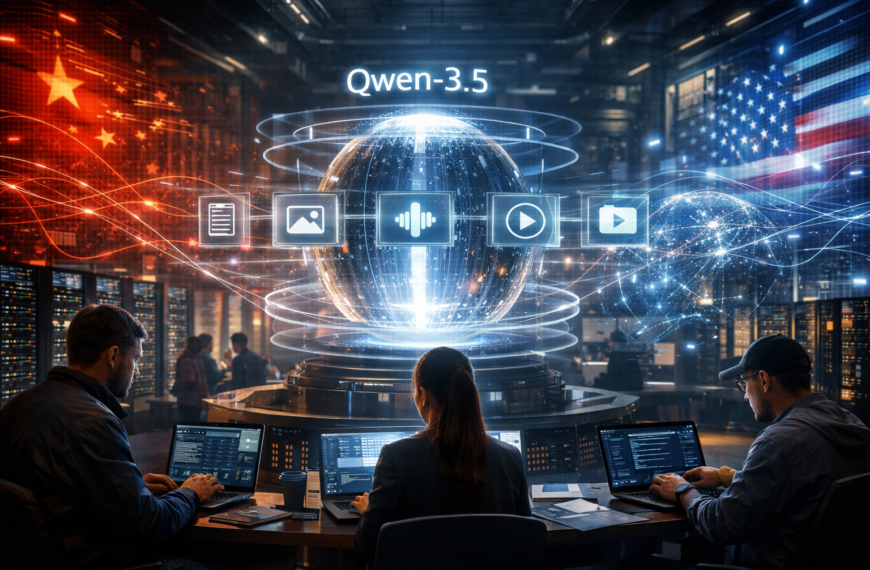





























































































































































































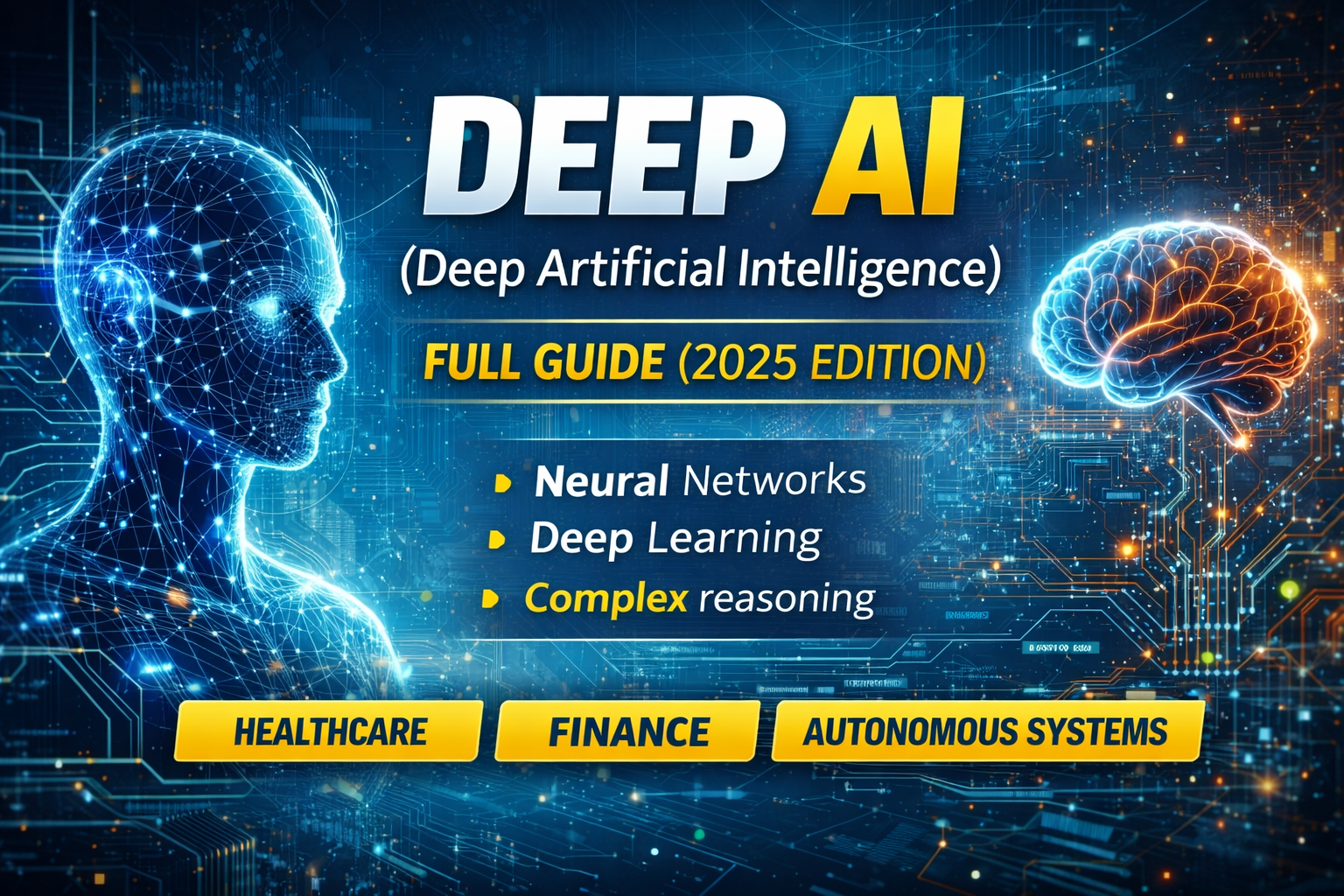
Artificial Intelligence (AI) duniya ka sabse fast-evolving technology hai aur uska ek advanced branch hai Deep AI, jise hum Deep Artificial Intelligence ya Deep Science of AI ke naam se bhi jaante hain. Ye AI ki wo field hai jo machines ko human-level intelligence ke kareeb samajhne aur achieve karne ki koshish karti hai — na sirf simple tasks balki complex reasoning, perception, creativity, aur self-learning tak.
🧠 1. Deep AI Ka Meaning (Definition)
Deep AI ek advanced form of artificial intelligence hai jiska focus complex problems ko solve karne par hota hai jahan machine ko intuition, reasoning, abstract thinking, aur human-like decision-making abilities milti hain.
Simple AI models sirf pattern recognition karte hain, jabki Deep AI systems logically reason aur contextual understanding bhi dikhate hain. Isliye, Deep AI ko next-gen artificial intelligence kaha jata hai.
📚 2. Deep AI vs Traditional AI
| Feature | Traditional AI | Deep AI |
|---|---|---|
| Scope | Narrow tasks | Complex tasks, reasoning |
| Learning | Predefined rules | Self-learning & adaptation |
| Data dependency | Manual feature extraction | End-to-end learning |
| Cognitive ability | Low | High |
| Examples | Rule-based systems | Deep Learning, neural reasoning |
🔍 3. Deep AI Ka Core: Deep Learning & Neural Networks
Deep AI ka backbone Deep Learning hota hai — jisme artificial neural networks (ANNs) use hote hain jo human brain ke structure se inspired hote hain.
🧠 Neural Network Components
- Input Layer – Data machine ko diya jata hai
- Hidden Layers – Complex features learn hote hain
- Output Layer – Final prediction ya decision generate hota hai
Deep AI models kaafi layers (hence deep) hoti hain, isliye wo high-level abstract features samajh paate hain.
🤖 4. Deep AI ke Popular Techniques
✅ 1) Deep Neural Networks (DNN)
Multiple layers wale neural networks jo complex pattern recognition karte hain.
✅ 2) Convolutional Neural Networks (CNN)
Majorly image & video recognition tasks ke liye use hote hain.
✅ 3) Recurrent Neural Networks (RNN)
Sequential data like text aur speech me strong.
✅ 4) Transformers
NLP (Natural Language Processing) me state-of-the-art models jaise GPT, BERT is architecture par based hain.
📊 5. Deep AI Applications (2025 Trends)
Deep AI ka impact har industry me dikh raha hai:
🧠 Health & Medicine
- AI-designed drugs
- Early disease detection
- Personalized treatment planning
📱 Natural Language & Chatbots
- AI text generators
- Real-time translation
- Conversational assistants
🚗 Autonomous Vehicles
- Self-driving cars
- Safety decision systems
🖼️ Computer Vision
- Face recognition
- Automated surveillance
- Robotics navigation
📈 Finance & Trading
- Market prediction
- Fraud detection
⚙️ 6. Deep AI Challenges
🔹 High Compute Requirements
Deep AI models huge data aur computing power maangte hain — jise GPUs/TPUs se solve kiya jata hai.
🔹 Explainability
AI ka reasoning explain karna mushkil hota hai (black box problem).
🔹 Bias & Fairness
Data bias se unfair output aa sakta hai, jise proper datasets aur ethics se avoid karna padta hai.
🪪 7. Deep AI Ethics & Safety
Deep AI jaisa powerful tech ethical use aur safety governance mangta hai. Isme highlight hai:
✔ Bias elimination
✔ Transparent decision logic
✔ Human-in-the-loop systems
✔ Privacy protection
🌍 8. Future of Deep AI (2026 & Beyond)
💡 Strong trends jo 2025–26 me dekhne ko milenge:
- General AI research acceleration
- AI in neuroscience collaborations
- AI reasoning close to human cognition
- Better energy-efficient AI hardware
🛠️ 9. Tools & Libraries Used in Deep AI
| Category | Examples |
|---|---|
| Deep Learning Frameworks | TensorFlow, PyTorch, JAX |
| NLP Models | GPT, BERT, T5 |
| Computer Vision | OpenCV, Detectron |
| Data Tools | NumPy, Pandas |
🧩 10. Deep AI Facts You Must Know
✔ Deep AI systems learn hierarchical patterns from data.
✔ They can generate text, images, sound, video.
✔ Used in autonomous systems, healthcare, finance, robotics.
✔ Require massive datasets + computing infrastructure.

 Takeshawar Dewangan says: