





































































































































































































































































































































































































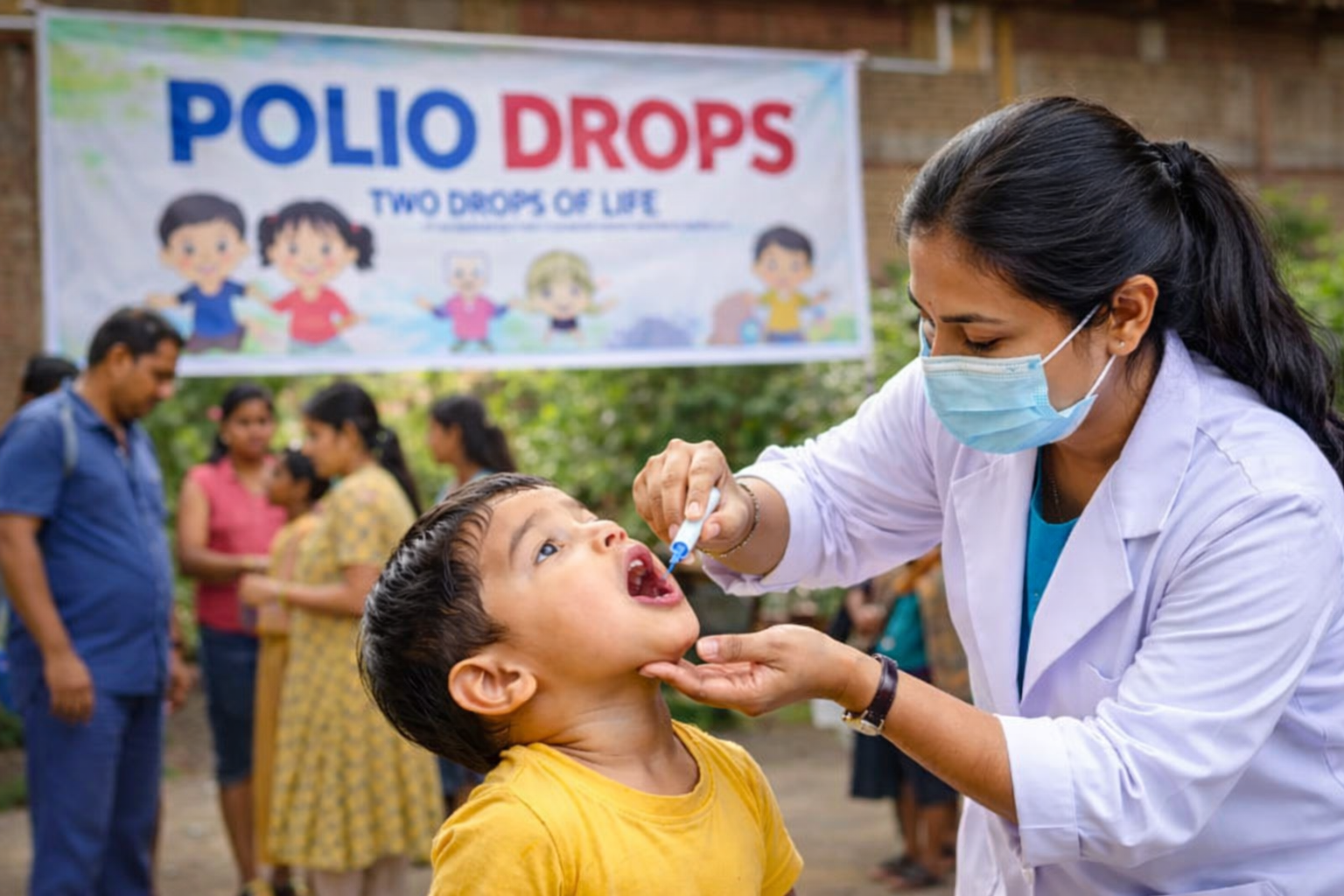
A delayed polio dose doesn’t remove existing protection, but the schedule is important. A gap in vaccination can weaken gut immunity and increase the risk of transmission in the community. Catch-up doses ensure children remain fully protected and restore immunity levels.
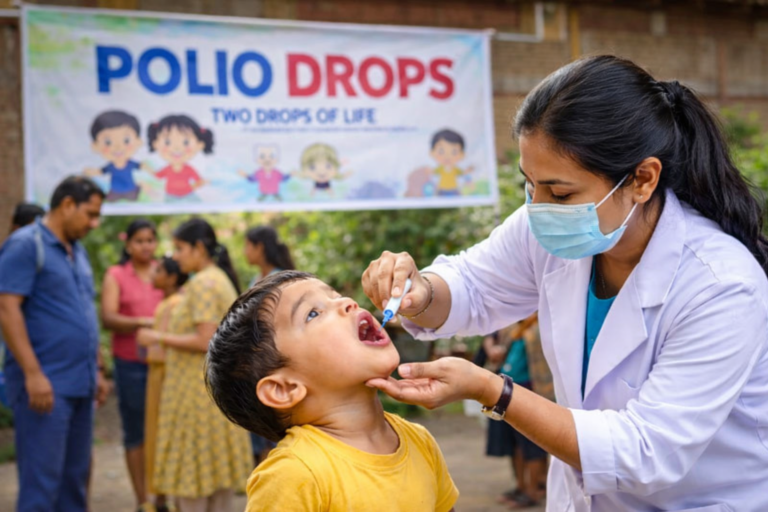
When nationwide Pulse Polio campaigns begin, like the ongoing drive in Karnataka, they’re often accompanied by the reminder that a missed dose can be taken later. The National Pulse Polio Programme 2025 has started in Karnataka on December 21 and will run until December 24. This makes it important to clarify key questions parents have regarding polio vaccination. Even though follow-up doses are available, missing or delaying polio drops leaves many wondering how it affects a child’s immunity.
How Polio Drops Protect Children
Unlike several childhood vaccines that build immunity primarily in the bloodstream, the Oral Polio Vaccine (OPV) focuses on strengthening immunity in the gut. Since poliovirus mainly spreads through contaminated food and water, intestinal protection is essential. By preventing the virus from multiplying silently in the intestines—even in children who show no symptoms—OPV helps block transmission.
So, polio vaccination isn’t just about shielding one child; it’s a community protection strategy aimed at stopping the virus from circulating altogether.
Why Timing Matters in Pulse Polio Drives
Pulse Polio campaigns set doses at specific intervals to block any possible gap in immunity. Delays can weaken the protective shield against virus spread and disrupt the broader goal of herd immunity in the community. Timely drops ensure that both the child and surrounding population remain fully protected.